

Constructing Understanding
Allowing students to expand their knowledge of the world through experiences.

I recently saw an educator refer to this time in the school calendar (at least here in the Northern Hemisphere) as the “Digging In” period. The time when first-day jitters have calmed, the two-week testing of the boundaries has dwindled, and the real work of engaging with academic standards has begun.
When I was working on my Master’s in Elementary Science a few years ago (cough!), my cohort was assigned a book called Cultures of Curriculum, which basically explores “six curricular orientations in contemporary American society.” It is the only course book that remains on my bookshelf, and I refer to it often.
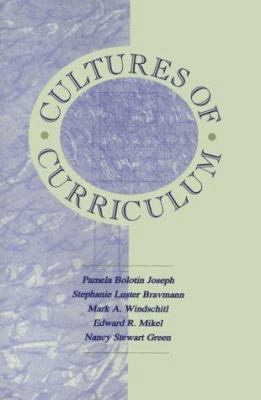
Those of you who know me won’t be surprised that my beliefs align with the orientation the authors have labeled “Constructing Understanding”. It stems from the work of educators and theorists like Eleanor Duckworth, Jean Piaget, and, of course, John Dewey.
Below are themes central to the constructivist orientation. How many reflect your own philosophy of education?
Centrality of the learner - students’ lived experiences form a foundation for their understanding of the world. They are “capable agents of knowledge production, rather than passive consumers of information.”
Complexity - the employment of problem-based learning as the conduit for complex inquiry that will be ongoing throughout the child’s life.
Engagement - “Students begin units of study by experiencing the content they are studying [the standards, in our case], rather than having abstract explanations provided to them ahead of time.”
“Children who are immersed in the constructivist culture tend not only to have a greater capacity for generating their own knowledge through problem solving but also for identifying problems, and perhaps most importantly, for persisting in problem-solving efforts.” (Duckworth, 1978)
These thoughts and beliefs lead directly to what I want to share with you this month—two real-life examples that recently took place.
As I was hunting for a STEM activity to go along with the ‘Fish’ lesson in this month’s TIDE, I stumbled across a cool video. It demonstrates how children can utilize the classic ‘Cartesian diver’ project to model the function of a fish’s swim bladder. So, my 5-year-old granddaughter and I gave it a try!


To be honest, did she understand the concept of a fish bladder and the relationship between air pressure and its function? No. But did she have to engineer and reengineer (and reengineer!) to get the fish to sink and float? YES! Did she learn through failure? YES! Did she begin to understand the value of persistence? YES! Did she want to show her “science speriment” to everyone who came to our house for days? YES! YES!
The other example of the constructivist approach comes from my friend and colleague Carrie Robledo, who is currently teaching 2nd grade. Rather than jumping straight into the science curriculum, she guided her students through activities to help them first THINK and BEHAVE like scientists. Check out the video clip HERE!


If you’d like either of my “Becoming A Scientist” slide decks, feel free to grab them here:
The deck I used with 3-5 students. (Need more info about the Mystery Liquids activity? Contact me!)
I am SO passionate about teaching using the constructivist approach grounded in the standards! For even more ideas and free resources, make sure you check out this month’s TIDE! You can always access previous TIDES on my website collazocove.com.
Thanks for all you do for your students! And if you’re a children’s author, thank you for creating wonderful books that we, as educators, can use as the foundation for our lessons!
Until next time,
Kim
This is fascinating Kim! It was wonderful to learn about the terminology used and discover that I align fully with "Constructing Understanding” as well. I will definitely have to try the fish lesson with my two kids!